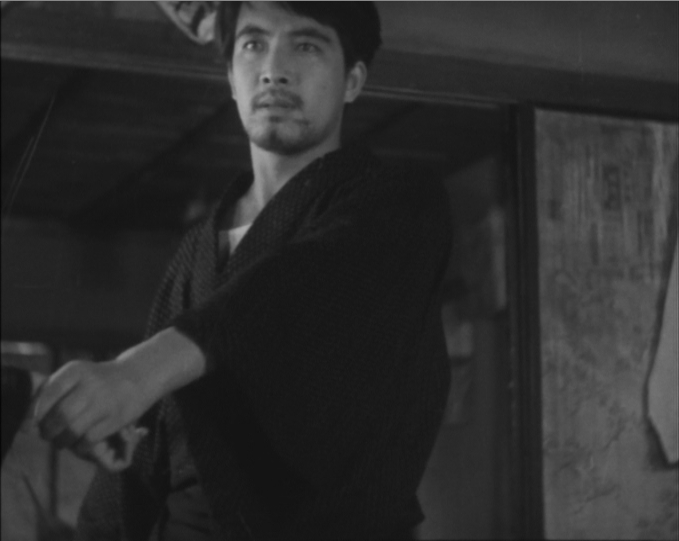
Ozu, Narrative Structure,
Passing Fancy: Donald Richie claims that with each succeeding film Ozu would use a simpler story and Ozu uses the story as a mere background to explore the way his characters react to them. This becomes evident in
Passing Fancy because it is simply a story about a single father and his relationship to his son and everything else that happens is simply in the film to explore this relationship. This becomes clear with the love triangle that is going on in the film. If this was a Hollywood film this would probably the whole basis of the film ending in some tragic consequence with the men killing each other or everything turning out fine for all three characters. Ozu uses this story element simply as a background to the father-son relationship. Not only does he not focus on the love triangle but around two-thirds into the film he disposes of it completely and it is almost like he starts over with a new story about a sickly son. This “second” story that Ozu introduces, even more so than the love triangle, really reiterates his focus on the relationship between the two. This loose narrative structure is another aspect of Ozu’s cinema that would be very hard to get away in a studio in Hollywood at the time where reliance on story was (and still is) enormously significant, it also recalls the type of rambling tales the naniwa-bushi performers, as shown at the beginning of the film, usually told.
Also, the famous match cut in the film:
establishing shot
Clearly breaking continuity, Ozu's frames both characters in the same exact spot and position:
shot
reaction shot